Wednesday, August 31, 2016

Syria, like Libya, is largely a media war

Syria is largely a media war in the same way that the Libyan War was, 5 years ago.  Nearly everything you hear about the Syrian conflict is propaganda or sensationalism; essentially worthless information, intended to falsely portray the anti-government rebels as peace-loving freedom-fighters, defending themselves against a brutal government that only wants to kill its own people.  Remember Muammar Gaddafi's Libya?  The rebels there were only trying to stop Gaddafi's soldiers from slaughtering innocent people ... right?  Hey, remember Saddam Hussein's Iraq?  "But, but ... he gassed his own people!"  You think most Americans really care about dead Iraqi women and children?  I think it's patently clear they do not.

Hey, the truth is never that one-sided.  In Syria, like in Libya, and especially in Iraq, there are atrocities on both sides; that's the very nature of "civil wars", friend.  Always. It is the rule; not the exception; and it should surprise no one.

This is simply another victory for the neocons, who have never had the slightest interest in "humanitarian" wars to protect civilians' lives.

The major US news media outlets are frantically selling yet another war to an amazingly pliant and gullible American public which apparently doesn't have the ability to rationally interpret fresh propaganda in the light of even a very recent precedent.

US involvement in the civil wars of other countries never works out well.  It is always a bad idea.

Well, regardless, we have to be on one side of the Syrian war or the other, right?  You're "for or agin' us", right?  Bashar al-Assad (like Muammar 
Gaddafi) is all bad; therefore the rebels who overthrew him are all good, right?  Sez who?  That's the classic logical fallacy of a false dilemma.

Now, you tell me, when is it a good idea for the U.S. to take sides in another country's civil war?  What's the correct answer?

This thing is only beginning ... it will be not be over when the government of Syria is overthrown by rebels, just like the Libyan war wasn't "all over" with 
Gaddafi's deposition from power in exactly the same way that Iraq was far from over when Saddam Hussein was taken down.  And it will not be "all over" in exactly the same sense that the Afghanistan mission ended with the death of Osama bin Laden.

C'mon, you knew when this thing started it was going to last a lot longer than American leaders said it would.  You knew it then, or you damned sure should have known it.  

Of course, if you bought Afghanistan, Iraq, Libya and now Syria, chances are, you'll buy the next one, too.   Most Americans will. 

Wednesday, August 17, 2016

An Example of Moral Courage: Max Yasgur (1919-1973)

Max Yasgur (1919-1973)

Max Yasgur was 49 years old, a thin man with a heart condition, when he heard that concert organizers had been tossed off the site of a three-day outdoor concert they were trying to organize which they were calling "Woodstock" near Bethel, New York. They were in trouble, they had just 30 days before the concert date to find a new venue. Max approached the four young organizers with an offer; he had a dairy farm nearby, he had land, he wanted to help. And Max Yasgur became an American counterculture icon, a part of history, his name will live forever. For what? For standing up for the rights of "hippies," for the "others," for the rights of people he didn't know, for the rights of people with whom he had almost nothing in common. Although the short hairs in his community reviled him for it, and threatened him anonymously, he was a champion for the rights of Americans to assemble, and their rights of free speech. For hippies.

And that's why Max Yasgur was a great American, a courageous man, and my hero. He stood for the rights and the dignity of others, at a time when intolerance and bigotry and hatred were tearing his nation apart. You know, like today.

When his neighbors found out that Yasgur was planning to lease land to the Woodstock organizers, they did all they could to stop him. His wife Miriam described later how they put up a sign along the road that said "Don't buy Yasgur's milk - he loves the hippies." When Max and Miriam drove by the sign, she said later, "I thought, 'You don't know Max. Now it's going to happen. The sign did it. When Max saw that, I knew darned well he was going to let them have their festival. You didn't do that to Max. He just turned to me and said, 'Is it alright with you?' ... I knew he was not going to get past this sign, so I said, 'I guess we're gonna have a festival." And he said, 'Yup, we're gonna have a festival.' And that was it."

At a town meeting, Yasgur addressed the entire assembly saying: "So the only objection to having a festival here is to keep longhairs out of town? Well, you can all go pound salt up your ass, because come August 15, we're going to have a festival!"

And that's what happened.

On the afternoon of the final scheduled day of the festival, Sunday August 17, 1969, just before Joe Cocker took the stage, Max Yasgur addressed a crowd of half a million people. Max said:
I'm a farmer, I don't know how to speak to twenty people at one time, let alone a crowd like this. But I think you people have proven something to the world - that a half a million kids - and I call you kids because I have children that are older than you are - a half million young people can get together and have three days of fun and music and have nothing but fun and music, and I God Bless You for it!

Max Yazgur, Woodstock, early afternoon, August 17, 1969 (just before Joe Cocker performed)
Video of the "I'm a farmer" speech (it's short, 2 minutes long)
Less than four years later, on 9 February 1973, after having retiring to his winter home in Marathon, Florida, Max Yasgur died. He was only 53 years old.

Thank you, Max.
___
Charles Aulds
August 17, 2016

Monday, August 15, 2016

Three Days of Peace and Music, Woodstock, 1969

Earlier this year, I read Michael Lang's book, The Road to Woodstock, published in 2009 for the 40th anniversary of the festival.  Michael Lang was the young producer of the Woodstock Music and Art Fair.  He was only 24 years old in 1969.

A decision was made early not to have strong security at the festival site; that was considered a bummer and totally out of step with the character of the festival, which was, Michael Lang said, "a test of whether people of our generation really believed in one another and the world we were struggling to create. How would we do when we were in charge? Could we live as the peaceful community we envisioned? I'd hoped we could. From the beginning, I believed that if we did our job right and from the heart, prepared the ground and set the right tone, people would reveal their higher selves and create something amazing. The idea is to get the audience almost as involved as the performers. If the crowd participates in the festival, people will want to respect the rights of others."

Earlier that same summer, there had been violent confrontations between kids and the police 
at other concerts.  Lang said, in his book, "It seemed obvious to me that the confrontational approach taken by the police [vicious police dogs, mace-spraying machines, and hundreds of cops suited up for battle] provoked the violence. I decided we would not have a uniformed police presence within our event."

Wes Pomeroy, head of security for Woodstock, told a town hall meeting: “We plan to create a community among all the people who attend the festival.  What happens then will be the responsibility of the audience as much as the promoters. If you give people enough to do, and give them what they pay for, there won't be any trouble."

And that's exactly what happened.  There was no violence at Woodstock; there were no confrontations between the police and the concert-goers,  It didn't happen.  The crowd, as Lang had hoped, was self-policing.  From the stage, announcers constantly reminded the people that they should look after each other like brothers and sisters.

At a time when millions of Americans, and billions of American dollars, were being devoted to the mechanized slaughter of at least one million people in a tiny, impoverished Southeast Asian country, Woodstock was truly a remarkable event.  A once-in-a-lifetime event; I only wish I'd been old enough to attend.  I was only twelve.

Hugh Romney (better known as "Wavy Gravy") and 85 members of a California commune called the Hog Farm, acted as impromptu security guards.  When asked, "What do you plan to use for crowd control?", Wavy Gravy answered, off the top of his head, "Cream pies and seltzer bottles!"


The Woodstock Music and Art Festival will surely go down in history as a mass event of great and positive significance in the life of the country.  That this many young people could assemble so peaceably and with such good humor in a mile-square area speaks volumes about their dedication to the ideal of respect for the dignity of the individual.
In a nation beset with a crescendo of violence, this is a vibrantly hopeful sign.
 If violence is infectious, so, happily, is nonviolence.
___
The Boston Globe, post-Woodstock article


Even today, I will not take a hit of brown acid from a complete stranger.
___
Charles Aulds
August 15, 2016


Tickets are now on sale.


Thursday, August 11, 2016

Hey, hey, LBJ ... how many kids ... ?

Whenever the exigencies of the military/police/security/surveillance state are accorded greater importance, and greater legal protection, than the rights of the people, I believe the groundwork is laid for tyranny. It means that "State interests" are superior to individual rights in the US.
 
The justification for that?  War.  It's always war.  New wars, and a continuous state of fear.

That is the very nature of every totalitarian state that ever existed.

It's made possible only by a state of perpetual warfare. 
 
And it wasn't a defensive war that turned Afghanistan, Iraq, Libya, Yemen and now Syria into ISIS strongholds. 
 
The people of these countries aren't nomads ... they are people who have occupied those lands for generations; since long before the United States existed.  And they are resisting US-led attempts to occupy, subjugate, control and exploit their countries.

They aren't going to permit it.

And they should not.  When I was just a kid, like 12, that would've been 1969, we lived deep in the mountains of the western Appalachians, North Carolina ... we had no TV, and I read everything I could get my hands on.  Which made me one obnoxious little shit because it was easy to find fault with many of the things the adults were saying about Vietnam.

Even as a 12-year-old child, living way back in the mountains, I could not believe that there was any possible way that the Viet Cong could be defeated on their own turf.  I said so ... of course, I was told I didn't know what I was talking about.

Except, apparently, I did.

Those people who are fighting western imperialism in Afghanistan, Iraq, Pakistan, Libya, Syria, Yemen, Somalia ... they cannot be defeated, unless they lose the will to fight.

Ho Chi Mihn and General Giap said so ... and they certainly weren't wrong.
 

They are children of the occupation, many with missing fathers at crucial periods (through jail, death from execution, or fighting in the Insurgency), filled with rage against America and their own government. They are not fueled by the idea of an Islamic caliphate without borders; rather, ISIS is the first group since the crushed Al Qaeda to offer these humiliated and enraged young men a way to defend their dignity, family, and tribe. This is not radicalization to the ISIS way of life, but the promise of a way out of their insecure and undignified lives; the promise of living in pride as Iraqi Sunni Arabs, which is not just a religious identity but cultural, tribal, and land-based, too.
___
Lydia Wilson, an Oxford researcher
http://www.thenation.com/article/what-i-discovered-from-interviewing-isis-prisoners/


Saturday, August 6, 2016

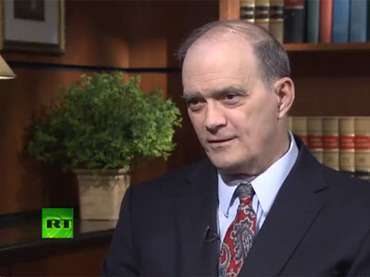
An Example of Moral Courage: William Binney


NSA veteran and whistleblower, William Binney

Edward Snowden was not the first whistleblower to reveal NSA spying without warrants on the American people.  That has been going on for many years, and some very brave people have tried to tell us about it. Most of them have been silenced; the US government is very hostile toward whistleblowers.

The world owes an enormous debt of gratitude to all the brave whistleblowers who have revealed the truth about the United States and its huge net of surveillance, spying on its own people, on America's own allies – spying on everyone. Spying everywhere. And all the time.

These whistleblowers are modern heroes; they put their careers and futures on the line. That's called courage; and it's called integrity. When you risk your life for a principle, not for power, profit or even hatred or vengeance. That's integrity.

William Binney is one man who did so.

A 32-year veteran of the National Security Agency, William Binney was considered one of the best mathematicians and code breakers (crypto-mathematician) in NSA history. While with the NSA, Binney helped design a top-secret program code-named Stellar Wind that he claims was used (post-9/11) to collect a vast amount of Americans' personal data. Not just Americans suspected of any wrong-doing, but a broad collection of spying.  It was spying on everyone, monitoring everyone's activities. Secretly. Much of what is known about the Bluffdale Data Center and the plans for unrestricted spying on American citizens came from William Binney.

On October 31, 2001, after 3 decades with the agency, Binney resigned from the NSA after it launched its illegal warrantless wiretapping program. His reason for leaving? "They violated the US Constitution setting it up," he says. "But they didn't care. They were going to do it, and they were going to crucify anyone who stood in the way. When they started violating the Constitution, I couldn't stay."

Those, friend, are the words of a true patriot.

Binney describes the US security state as a "turnkey totalitarian state" ... putting all the pieces in place, taking advantage of an unresisting public reduced by fear to a state of pathetic impotence. When all the components of a totalitarian state are complete; it will be too late to resist.

In 2005, Binney became one of several people investigated as part of an inquiry into the 2005 New York Times exposé on the NSA's warrantless eavesdropping program. He was placed under constant surveillance; primarily as a way of shutting him up ... it was a tactic of intimidation of Binney and his family. The NSA was determined to shut him up; to keep the truth from reaching the American public. To keep you from finding out.

One morning in 2007, Binney was at home taking a shower when FBI agents burst in and aimed their weapons at his wife, his son and himself. Binney was actually naked, in his shower, when an FBI agent entered his bathroom and pointed a gun at his head. His computers, disks and personal records were confiscated and were never returned. Yet, Binney has never been charged with any crime. Any crime at all.

Never charged with any crime; yet pursued by American intelligence agencies for revealing the truth about what they have been doing in secret. Sounds like the Stasi in communist East Germany, doesn't it?

And that's where the courage comes in; that's where the integrity enters the story ... William Binney refused to be silence by the State's scare tactics. And, yes, he put some skin into the game. It cost him. He had no way of knowing to what extent they'd punish him. Sometimes the unknown is even more fearful that what we know. 

The frightening question is not, "What have they done?" The most frightening question is, "What are they planning to do?" Brave whistleblowers, insiders who have found out, have tried to let us know what they are planning to do. For fifteen years, hardly anyone has cared enough to listen; because they are afraid of what they might learn.

But you know what? The entire world is listening now. Finally. Isn't that the way it always works? In any contest between power and patience, bet your money on patience?

If you've got 8-1/2 minutes and would like to hear William Binney in his own words, you might want to view The Program, the documentary film by Laura Poitras, released August 23, 2012.

A couple of years ago, William Binney sat down with Reason TV's Nick Gillespie to talk about secret NSA programs (Trailblazer and Stellar Wind) which have been used to gather information on American citizens.  That interview is available on YouTube:

Where I see it going is toward a totalitarian state. You've got the NSA doing all this collecting of material on all of its citizens – that's what the SS, the Gestapo, the Stasi, the KGB, and the NKVD did.

– William Binney, January 2014
   http://youtu.be/M66saPW2Gq8   (50m12s)

Along with John Kiriakou, William Binney won the 2012 Joe A. Callaway Award for Civic Courage which is awarded to "national security whistleblowers who stood up for constitutional rights and American values, at great risk to their personal and professional lives." (Remember, that is the definition of moral courage

Saturday, July 30, 2016

An Example of Moral Courage: Nadja Dizdarevic


Nadja Dizdarevic 


Nadja Dizdarevic (NaÄ‘a Dizdarević) is the name of woman who lives in Sarajevo, Bosnia and Herzegovina. The mother of four, she wasn't even thirty years old when her husband, Hadj Boudella, a Muslim of Algerian descent, and five other Algerians living in Bosnia were arrested on October 21, 2001, after US authorities informed the Bosnian government of an alleged plot to blow up the American and British Embassies in Sarajevo. One of the suspects in this alleged plot had (supposedly) placed some seventy phone calls to the Al Qaeda leader Abu Zubaydah in the days immediately following September 11th WTC tower attacks. 

At the request of the US government, the Bosnians held these six men for three months. No charges were filed against them. No evidence was ever presented to substantiate any of the claims made against them. On January 17, 2002, the Bosnian Supreme Court ruled that they should be released. But as the men left prison, they were kidnapped, handcuffed, forced to put on surgical masks with nose clips, their heads covered in hoods, and they were forced into unmarked cars by masked men, some of whom were wearing uniforms of the Bosnian special forces. Nadja Dizdarevic had come to the prison that day to meet her husband, Hadj Boudella, and recognized him, despite the hood, because he was wearing a new suit that she had brought him the day before. "I will never forget that night," she said. "It was snowing. I was screaming for someone to help." A crowd gathered and tried to block the vehicles, but didn't succeed. The suspects were taken to a military airbase and kept in a freezing hangar for hours; one member of the group later claimed that he saw one of his abductors remove his Bosnian uniform, revealing that he was an American. The US government has refused to confirm or deny that it was involved in the kidnapping, but the men were immediately turned over to the Americans.

Six days after her husband's abduction, Nadja Dizdarevic found out that her husband and the 5 other men had been sent to the US detention facility in Guantánamo Bay where he was held for the next 6 years. During his 6 years at Guantánamo, Nadja organized demonstrations, sit-ins, and hunger strikes, to draw public attention to her husband's case. During her last hunger strike, in December 2005, Dizdarevic collapsed and was hospitalized. She did anything and everything she could to draw attention to her husband's case and his innocence. Wouldn't you do the same if you were in her position? If not, then why not

When Boudella attempted to plead his innocence before a Pentagon Combatant Status Review Tribunal, he asked that the Bosnian Supreme Court's verdict exonerating him and freeing him, be read to the court. The tribunal said that it was "unable to locate" a copy of the verdict. No evidence was ever presented against Boudella at his "trial", only a list of "allegations" (link), none of which could be proven. 

On 20 November 2008 US Federal District Court Judge Richard Leon ruled that Mr. Boudella and four of the other five men with whom he was arrested, was not being lawfully held and ordered his release because the U.S. had absolutely no credible evidence to justify their detentions. In telephone interviews, Nadja Dizdarevic called on Bosnian authorities to follow up with a demand to the United States that the men be released immediately. On 16 December, 2008, Boudella al Hadj and two other men were released back to Bosnia, never having been formerly charged with, or tried for, any crimes. By the presumption of innocence (a cornerstone of the American system of justice), they are not guilty of any crimes, and they never have been. The three men are Mustafa Ait Idir, Mohamed Nechla, and Hadj Boudella. They are all free men now, as they deserve to be. 

Ms. Dizdarevic said that she was astounded that her husband could be seized without charge or trial, at his home, during peacetime, and after his own government had exonerated him. The term "enemy combatant" perplexed her. "He is an enemy of whom?" she asked. "In combat where?" She said that her view of America had changed. "I have not changed my opinion about its people, but unfortunately I have changed my opinion about its respect for human rights," she said. "It is no longer the leader in the world. It has become the leader in the violation of human rights." 

Some of this is may be hearsay, but there are certain things that we know for sure. What do we know for sure??? 

We know that Hadj Boudella was an innocent man. He was held for seven years without charges being filed. We know that was absolutely un-American. I'm not claiming that was was a violation of Boudell's "civil rights." The US government claims that, even as an innocent man, he has no rights if accused (even without evidence or without judicial process). Boudella' imprisonment without charges or trial was not a violation of his civil rights, hear me now: it was a violation of the very most basic American principles of justice. It was a violation of my principles, and I hope, yours.  I'm saying that my principles (and I hope, your principles) were spat upon, were crapped on. 

I'm not concerned about Hadj Boudella; he's a free man. He's also an innocent man who was imprisoned by the United States military, illegally and unjustly, for seven years. But I'm not concerned about him. He's a free man now. I'm not concerned about Nadja Dizdarevic, either. She won her courageous fight for her husband's freedom. She's a heroine. That's something no one can take from her; ever. 

I'm concerned about Americans; and what happened to their country. They betrayed their own stated principles; which remain my principles; they failed themselves. 
___


Sunday, July 17, 2016

An Example of Moral Courage: Michael Roberts


An American displaying his "patriotism" 


The TSA's security screening procedures made their way into the mainstream news five years ago when a video was posted on YouTube of a 6-year old girl being forced to submit to a pat-down search. According to the girl's father, that pat-down left her confused and crying because she thought she'd done something wrong. After the release of that video, others came forward with their own stories of underage children being groped. 

I haven't flown on a commercial air-flight in over ten years, and I will not (at least through US airports). I would never suggest that others do the same.  That was my choice, a personal choice.  And it's not one I could have made during most of my professional career, especially working for the US Department of Defense.  It was a personal choice and it is one most people cannot or will not make. I understand that; I accept that. But I also believe there should be a point at which one's moral revulsion to acts like these should outweigh a person's willingness to submit to authority. For me, that point was reached a long time ago. But no one should ever believe that individual conscience and dignity are always superseded by the demands of authority. At some point; a person of character must draw a line. Fair warning: if you do; you may have to stand alone. 

On October 15, 2010, a 35-year-old ExpressJet pilot (and father of six) from Memphis Tennessee named Michael S. Roberts put his job and career squarely on the line when he refused to submit to a TSA full body scan, invoking constitutional grounds for that refusal.  Michael Roberts wouldn't submit to the indignity and humiliation of a full body scan, and refused to remain passive and silent in obedience to a government authority that required it. One man among tens of millions. He stood alone. 

Michael Roberts' very individual stand would never have been noticed by the general public had he not appeared on ABC's Good Morning America on October 22, 2010: 

http://abcnews.go.com/US/pilot-refuses-full-body-scan-sees-rights-violation/story?id=11942279 

Michael Roberts did nothing more than any one of us should be willing to do. He exhibited courage, in a time of almost universal weakness and cowardice. In a time in which violations of liberty that would once have been considered unreasonable or outright absurd were meekly accepted by nearly everyone for the sake of convenience and comfort. The price of security? How much is too much? 

I am not trying to encourage any other person to take these same actions; it was easy enough for me, my job didn't hang in the balance.  In Michael Roberts' case, it could have cost him his job; his livelihood; his career.  He put a lot on the line.  

It was affirming for me to know that I'm not the only American who is absolutely disgusted by the complacency of American citizens toward unprecedented and unwarranted intrusions on civil liberties in the wake of a single terrorist attack on one American city, which occurred nearly fifteen years ago.

Michael Roberts later formed an organization called We Won't Fly; which stated this as their founding principle:
Citizens of a free society must not tolerate attempts by government security agents to see beneath their clothing or lay hands upon them without probable cause. Such acts are inconsistent with the undergirding principles of a free and virtuous society. Federal sanction does not and cannot negate the criminal nature and design of such acts. These despotic overtures violate Natural Law and are expressly prohibited by the Fourth Amendment of the United States Constitution.
How could any American disagree with that? 

Before I read his opinion piece, I had never before run across the Latin expression Michael Roberts quoted in that essay: "Malo periculosam libertatem quam quietum servitium." It is translated as "Better freedom with danger than peace with slavery." That says it succinctly. 

This is not a political issue; it is one of the conscience. How much government control are you willing to live with? How much obedience to authority are you capable of?  How much do you cherish your liberty? Most Americans, if they were honest with themselves, would have to admit "not very much; not when I'm frightened." 

Michael S. Roberts answered those questions differently.


Update: I chatted briefly with Michael Roberts on New Year's Day 2014. He confirmed that he was still employed with ExpressJet. He added that they wanted to fire him at the time, but he explained to them that he never refused to do his job, but that he was PREVENTED from going to work by the TSA. "Besides," he added, "ExpressJet was never in control of the situation."