Tuesday, July 8, 2025

Fifty-four Forty or Fight

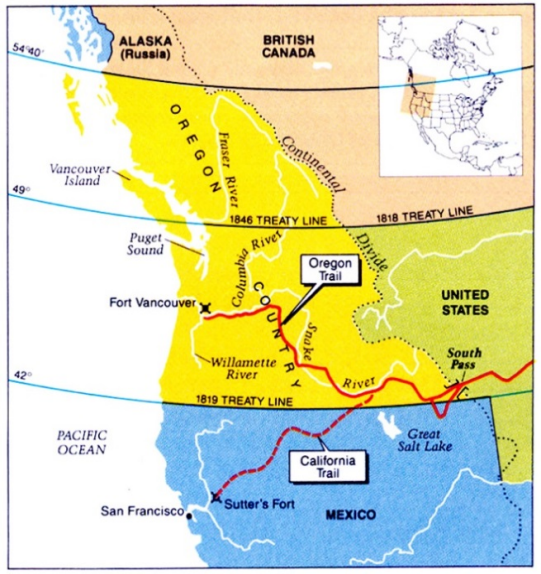
The War of 1812 (which ended in 1814) is sometimes considered the last of America's attempts to annex territory that now belongs to Canada. 1814 isn't completely true. In fact, at the time of the Mexican annexation (1845), the US still had ambitions of taking land from Canada (which was still, at the time, a colony of Britain) by force of arms. In fact, it was the popularity of Democratic presidential candidate James K. Polk's "Fifty-four Forty or Fight!" expansionist agenda that won him the election of 1844. What was that all about? It was about taking territory from Canada by military force if necessary. They would have done it, too, except for the fact that the US had expended all its resources in a war against Mexico to annex (by force of arms) what is now California and Texas.


The region the United States threatened to take by force included Vancouver and Victoria Islands … today, the most prosperous regions of Canada.

Do not deceive yourself into believing the US has never launched an aggressive, unprovoked attack on another country. Self-deception is the worst of all lies—a lie we tell ourselves.


The greatest threats to Canada's sovereignty have always come from the United States and from its claim of "Manifest Destiny." Indeed, I believe the greatest success Canada has achieved during its existence has been averting annexation by the Americans.


Given US current ambitions of global military domination, and the threat by the current US President to annex Canada; I see no strong reason why Canadians should consider its own territory off limits to American conquest today.

Canadians: prepare for war, or for subjugation by force.

My opinion? Fight ... or submit. In my opinion, it's an easy choice to make. It was for me.


Wednesday, January 10, 2024

It's a cowardice of the spirit

Many times since I moved to Canada 18 years ago, Canadians have told me that Americans are good people ... they just have a very bad government ... and it's not really the fault of the American people; they are just so propagandized they don't know what to believe anymore.  That's an argument that I don't believe holds water.  First of all, because Americans are supposed to be the world's shining example of a self-governing people; Americans are their own government.  If Americans want to deny responsibility for the actions of their government; they cannot at the same time claim to be a self-governing nation

As for propaganda; I have made a serious mistake believing, for years, that access to the truth was the antidote to propaganda.  Alternatives to the corporate-controlled US mainstream media are out there; whistleblowers have informed us of horrendous crimes (like the Abu Ghraib photos or the Collateral Murder video released by Wikileaks) that the US mainstream media chose not to investigate.  And the social media sites are rich, not just with conspiracy theories, though there's plenty of that, but with facts that the mainstream media chooses to ignore or, worse, attempt to discredit.

The mainstream US media is not part of any conspiracy to hide the truth; they are reporting what they believe their viewers and readers want to hear; they are filling a market demand, and that is not evil; that is just business.  Most Americans would prefer to be told what to think and how to feel.  That's comforting; that's security. 


If you are such a person, you will not heed my advice to "read a foreign newspaper once in a while." No. You are going to tune to that network news channel every evening, and get your talking points for the next day.  It feels right.  It comforts you in your beliefs.  It thinks for you.


That isn't ignorance, and it isn't indolence. It's a cowardice of the spirit.  It's a cowardice that makes a man want to give control of his mind and his conscience to a political party or to a church or to religious leaders, or the US Marine Corps or Boeing Aerospace or whatever institution or ideological credo.


Look, I know we all have biases and beliefs we'd prefer not to give up.  But when we willingly, eagerly, attempt to hide the truth, or hide from the truth, because we just don't want to deal with it, or the feelings that it might engender, we exhibit cowardice of the spirit.  It's not cowardice based on fear for our safety; but on a fear of having to deal with basic human emotions and moral decisions.  We run from ourselves.  We let someone else deal with those most basic individual moral conflicts.  We fail to exhibit something that I believe is properly termed "character."


So I'll say, once again, put down that cell phone and read something for a change.  I have zero expectation that anyone will.  Addictive behaviors can be extremely hard to break.


The core of all character lies in individuality. Character is a moral fact: and, until life is individual, it is not moral. And by individual we mean something single, separate, and alone, that cannot be accounted for from outside, cannot be grouped under any general laws, cannot be extracted out of outside conditions. Its actions must spring from out of itself, it makes them happen; and you have to enter into its inner life and secrets if you would know why it does anything. However alike the circumstances may be, no other being would do exactly what this character does, or say what it says. It is this seal of individuality which it sets on everything that comes out from it, which makes it a character. Sometimes it stamps it weakly, and then we say a person has little or no character; or sometimes it stamps it forcibly, and then we say, ‘That is a man of character.’


– Henry Scott Holland, Creed and Character, 1887


Thursday, August 17, 2023

On the passing of my friend, Peter Smith (1966-2023)

I was saddened to hear of my friend Peter Smith's sudden passing this week. (his obituary)

Peter was 56.

I moved with my wife and 14-year-old daughter to New Brunswick, Canada in October 2005.  One month later, Peter Smith shared these photos with me.  He was one of the first friends I made in Canada

Peter was a man I knew to love beauty, to love life, to love adventure, and to love his wife, Molly.

I had the utmost respect for him.


Peter took these photos on Sunday, 11 September, 2005, in Sussex, NB


Saturday, August 5, 2023

Google knows what you did last summer

 Here's something you may find interesting, even "cute" in a way:

Back in the winter, I returned some equipment to a Bell/Aliant store.  When I approached the building the door wouldn't open.  A guy ran over to the door from inside the store and opened it manually.  "It's because you're wearing a mask," he explained.

"Oh, you have a facial recognition system," I said.

"No, not really," he said, "it just keeps people out whose faces match a profile of bad guys.  We don't collect information on our customers."

"I see, it's a facial recognition system that only detects bad people."  

I would bet money there's an image in a database somewhere of me entering that store, with the exact time and date.  Just like recorded surveillance video footage.  No harm done ... except I bet that image can be used to link me to countless other pieces of data, including every location I've taken my cellphone.

We all have the right to engage in perfectly legal activities that harm neither ourselves or anybody else without continuous scrutiny of our activities and without fear that we'll be mistakenly identified as a "person of interest" or whatever. As I've pointed out before, I'm doing nothing wrong when I use the toilet; yet I still believe I have a right to do that in complete privacy. (trust me, you don't want to watch)

Privacy is a basic human need, and a respect for privacy is basic human decency.  What I say, to whom, and where I say it, simply is not anyone else's business but my own.  I resent being told I'm the one who's doing something wrong when I express a desire to protect my privacy.  And I think privacy is worth defending.

I would also like to stress this point: it is not the actions of those who intrude on our privacy that appalls me, it's the passivity of the people who accept one of these two claims:  

1Heck, who cares?  I've already shared half my life on FB ... nothing's really private anymore, anyway.  

Worse, because it's a passive acceptance of authoritarianism: 

2) I am doing nothing wrong; why should I care if my actions are being recorded?  If you're not doing anything wrong, you should have nothing to hide.

Yeh, if you are an honest law-abiding citizen, then you should not harbor a desire for privacy.  Not in what you do, or where you go, or whom you love; not in your finances, your personal or your business relationships, your communications, or your personal beliefs and practices.  These things don't belong to you.  They belong to society, to the State.  And if you seek to conceal them; quite obviously you are trying to conceal something you've done wrong.  Bad person.  Bad citizen.  

People are really twisted mentally today ... not just those who control the instruments of ubiquitous surveillance, but those who think they're "cute".

Friday, July 28, 2023

Torture is NOT a "legal" issue (it's a moral issue)

Most of the arguments that were made to defend the use of torture techniques by American military and intelligence agency personnel centered around the "legality" of those techniques.

First of all, that was a classic "red herring."  It was a diversionary tactic, intended to divert attention from the fact that the use of torture is, has always been, and always will be a moral issue, not a legal one.  Those who ordered the use of torture against suspected islamists in secret CIA prison camps covered their legal asses very well ... completely, I'm sure.  I'm not interested in their legal arguments at all ... they are not relevant to the issue as it concerns us, the American people.  And the morality of torture is all that should concern us.

I was concerned only with the honor of the American people; and with the American nation.  And that honor was what was violated by the use of torture ... not merely international law or treaty law.

In short and in summary ... Americans shamed themselves by their defense of this practice.

I am proud that I refused to stoop to that moral low place.

The high ground that was given up has not been recovered.  It is unrecoverable.  And it is the loss of that moral high ground that has been most damaging to the US and to the security of the American nation ... not the revelations that Americans are "torturers."  

Again, I'd like to say that when Americans, as a people, defended the torture of helpless prisoners, detentions without legal recourse or any evidence of wrong-doing, and armed attacks on weaker, unarmed and defenseless nations that had done nothing to deserve those attacks, Americans did not violate any law, or even the rights of others.  Americans violated the very most basic American principles of justice. Americans violated their own principles. Those were my principles, and I hope they were yours.  I was brutalized.  So were you.

Americans made an evil choice: to trade something precious (that which makes America what it is) for mere promises of a little bit of extra promised security.

In sanctioning torture, Americans chose badly.

I'm sure, though, that the United States will never provide cluster munitions to anyone they know will use those weapons.

Friday, July 21, 2023

What does propaganda look like?

A few years ago, I worked on a project for the Canadian federal government. In our project space, we were surrounded by propaganda posters .. one morning I was staring at this one from Veteran Affairs Canada, and quipped to my coworkers, "I want to die in a war, Grandpa, just like Daddy!"
Holy crap... my co-workers did not think that was the least bit funny. I argued (unsuccessfully) that it was a propaganda poster. 

But that poster was propaganda ... emotionally evocative. Crafted for political manipulation.

Sunday, June 25, 2023

35 years ago: James Hansen delivered his ground-breaking Senate testimony

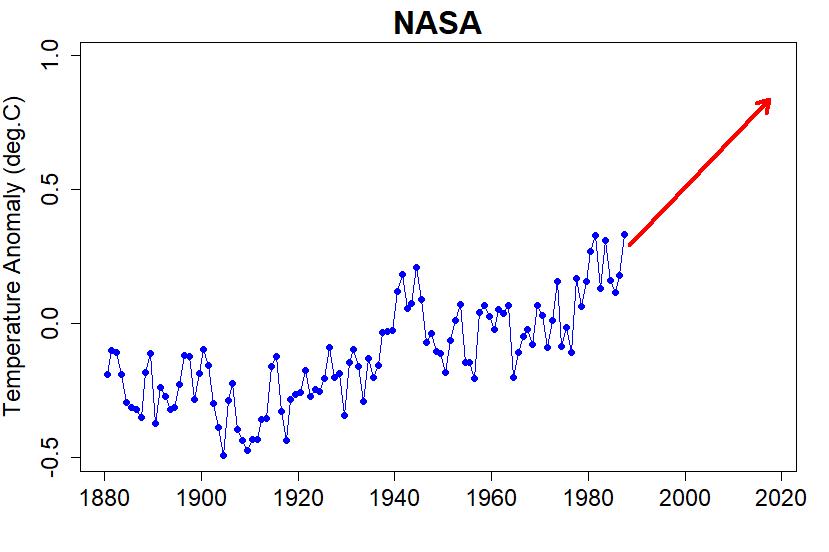
 Thirty-five years ago, on 23 June 1988, NASA scientist James Hansen gave testimony before the US Senate in which he warned that the global climate was changing; due to greenhouse gases in its atmosphere, our planet was warming.  He predicted that the warming would continue.  The New York Times reported that testimony on Page 1, under the headline "Global Warming Has Begun".


Were Hansen's 1988 projections correct?  The overwhelming consensus of scientists around the world:  "Hansen nailed it."


The data collected over thirty years proved him right:

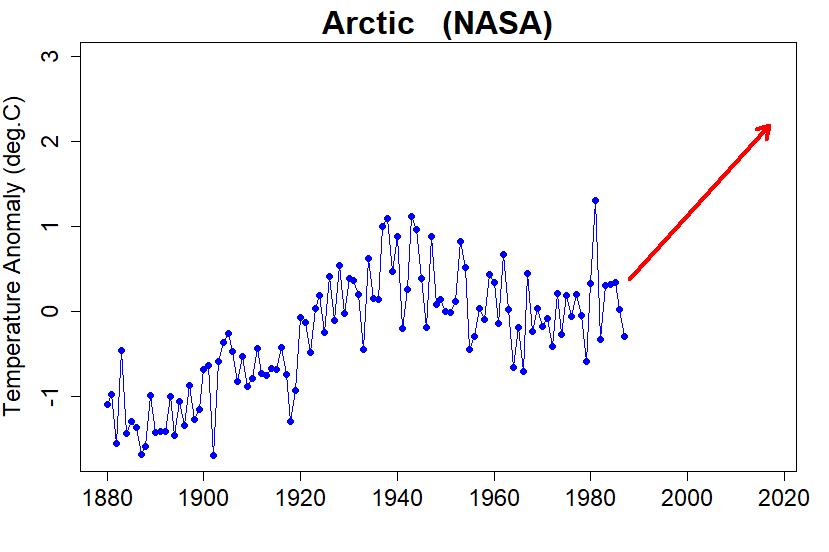
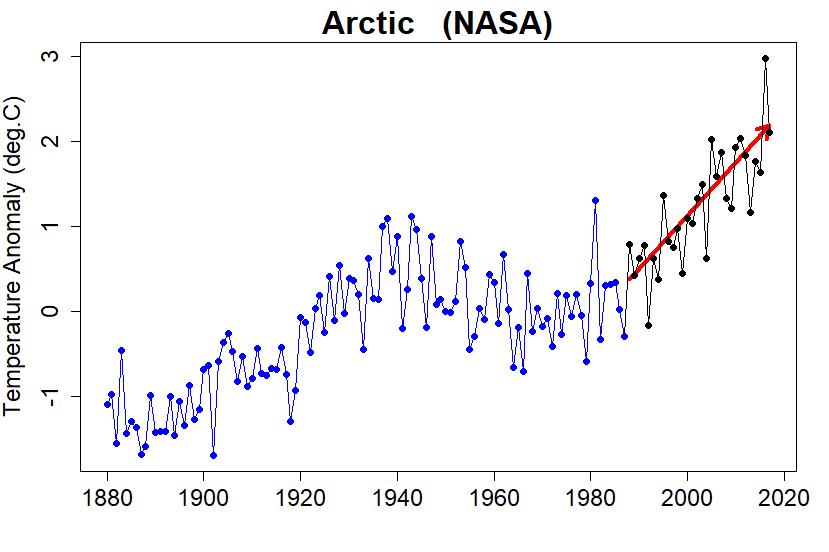
Hansen also forecasted that the Arctic would warm even faster than the planetary average

What happened since? The Arctic warmed even faster.

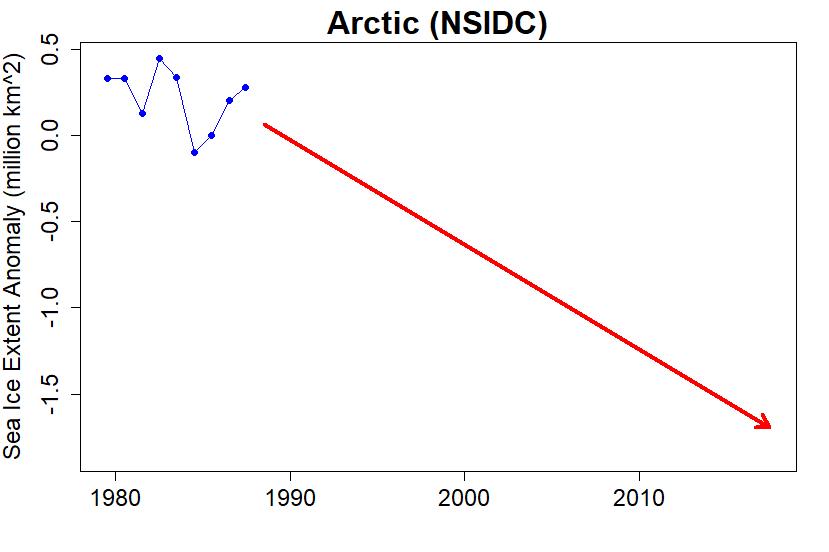
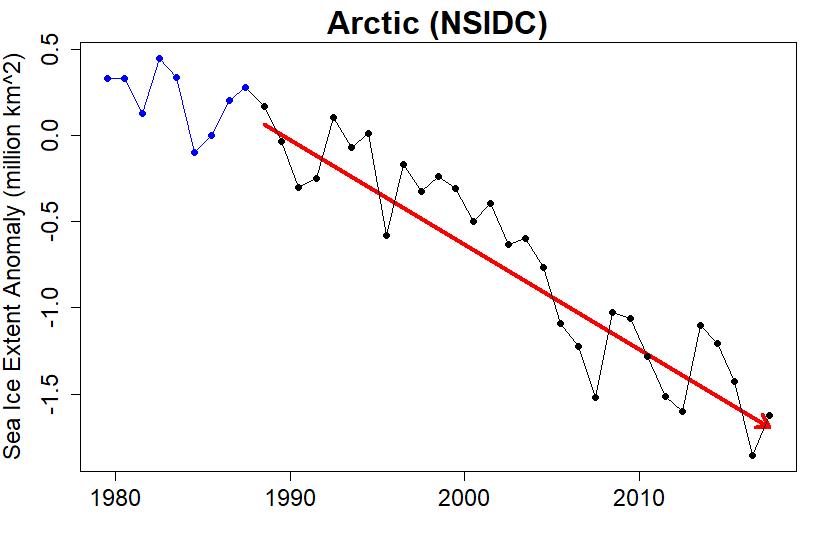
Hansen forecasted that the amount of sea ice in the Arctic would decline.

What happened since? The amount of sea ice in the Arctic declined.

So, was this guy some kind of kooky clairvoyant, or was Jim Hansen just a very good scientist?

Jim Hansen, by the way, is now 82 years old.


Sunday, August 29, 2021

Yeh, I'm old enough to remember

Americans are supposed to have short memory spans.  But I remember.

In 1985, US Presiden​​t Ronald Reagan introduced a group of six visiting Afghan mujahideen warriors to reporters on the White House lawn.  Reagan proclaimed, "These gentlemen are the moral equivalents of America's founding fathers."

Those warriors were, of course, leaders of the groups that became the Taliban and al-Qaeda.  Neither of those groups would exist today if not for the help of the US, which was determined to hand Russia a defeat in Afghanistan as humiliating as the American defeat in Vietnam.  The Americans were driven by egoism. By hurt pride.  Osama bin Laden wasn't in that group of six at the White House that day, but he was one of those mujahideen leaders, and he was an ally of the United States, trained, armed and funded by the Americans.  Oh, the irony of it is so rich.

And, oh how we laughed when Leonid Brezhnev's soviet army suffered a shameful defeat at the hands of those mujahideen warriors in 1989.  Tucked tail and fled.

Listen.  Yeh, I hear it, too.  That's the sound of Russian laughter, and I can't help thinking, "he who laughs last, laughs best."

That is what happened, 36 years ago.  The wind was sown ...


And, in case you don't remember, and you need to be reminded, neither the Taliban or ISIS existed before the US got involved in Afghanistan, funding and training and supplying weapons to the mujahideen freedom fighters who were determined to expel the Soviet Union from their country.

Remember the Khmer Rouge?  

In 1970, Richard Nixon and then National Security Adviser Henry Kissinger sent US troops on secret missions into Cambodia to clean out Viet Cong sanctuaries and destroy their supply lines and started bombing Cambodia (a war crime of the first order).  The Khmer Rouge communists, who were very few in number, with very little popular support, used the heavy American bombing as a recruiting tool among the common people in the countryside, which is exactly what happened in both Afghanistan and Pakistan (if not in much of the Muslim world).

It took a scant five years for the Khmer Rouge to grow from a few scattered camps numbering an estimated 4,000 into the guerrilla army of 70,000 that seized the Cambodian capital in 1975 and began their "purge" of the population, which was basically a purge of anyone who supported or worked with the foreigners who invaded their country.   You know, traitors.  Mostly they killed the people who lived in the cities and who cared more about making money than in making a patriotic defense of Cambodia's sovereignty.

Isn't that what's happening, right now, in Afghanistan?

The Khmer Rouge did not come to power because the US stopped bombing Cambodia ... they came to power because the US started bombing Cambodia.

By the same token, it has been the US occupation of Afghanistan and the propaganda value of its indiscriminate use of aerial and drone bombing that has strengthened the Taliban for the past 20 years.  And, it was certain that when the US tucked tail and left the country in defeat, that the Taliban would "purge" the infidels in their country; it is not because the US failed to "stay the course."  It is because the Americans made the enormous mistake of trying to do what no military power has done in 1,000 years:  conquer Afghanistan, the "Graveyard of Empires."


Friday, April 23, 2021

War is a question of morality; and it always will be

The Rev. William P. Mahedy was a Catholic chaplain in Vietnam for a decade.  In his book Out of the Night:  The Spiritual Journey of Vietnam VetsReverend Madedy told of a soldier, a former altar boy, who asked him: "Hey, Chaplain, "how come it's a sin to hop into bed with a mama-san but it's okay to blow away gooks out in the bush?"

Mahedy wrote, "Consider the question that he and I were forced to confront on that day in a jungle clearing.  How is it that a Christian can, with a clear conscience, spend a year in a war zone killing people and yet place his soul in jeopardy by spending a few minutes with a prostitute? If the New Testament prohibitions of sexual misconduct are to be stringently interpreted, why, then, are Jesus' injunctions against violence not binding in the same way? In other words, what does the commandment 'Thou shalt not kill' really mean?"

"In theological terms, war is sin," wrote Mahedy. "This has nothing to do with whether a particular war is justified or whether isolated incidents in a soldier's war were right or wrong. The point is that war as a human enterprise is a matter of sin. It is a form of hatred for one's fellow human beings. It produces alienation from others and nihilism, and it ultimately represents a turning away from God."  ["nihilism" here means, simply, the rejection of all moral principles  CAulds]

The wars that the US is involved in (soon to be twenty years in Afghanistan, having accomplished ... well ... nothinghas exposed the truth about America's Christian fundamentalists ("christianists", not Christians), the hollowness of their morality, the hypocrisy of their religiosity.  On the subject of war, one that is without doubt a question of morality, America's leading religious leaders and institutions have been silent, not willing or brave enough to take a moral leadership position.  And now it is best they remain so, as they have nothing to say to us now.

Shockingly a few have even tried to defend ​​the indefensible.  To defend sin.  To affirm that evil committed in the name of good is not evil (a violation of one of the very most basic tenets of Christianity).  And the gap between the values that evangelicals claim, and the reality of their actions in the past 20 years, is an ugly open oozing wound.

I say, once again, principles that can be easily changed and manipulated by others, for whatever purpose, good or evil, aren't true principles at all.


Saturday, April 17, 2021

How Canadians and American differ on universal health care

​​​​​​I was 48 years old when I immigrated to Canada (from a Deep South US state) in 2005, with my wife and daughter (who was 14 at the time). Under the auspices of the NAFTA treaty (as skilled work immigrants) we became eligible for Medicare after a three month wait. And we have no complaints about Canada's system of universal health care.

When we came to Canada, Canada had a new conservative government and "privatisation" of the health care system was a hot topic. The Obamacare" debate in the States educated a lot of Canadians about our own health care system. And there are few Canadians now who support a privatized health care system like the one “enjoyed” by Americans.

I remember a conversation I had with a young consultant in my office about how Americans and Canadians are different.  We agreed that Canadians are in most respects (he said 75%, I said 90%) just like Americans ... but where they differ, the differences are profound.
​​
"It's not conspicuous," Jason said, "it's inside ... it's in our psyches."
​​
"How do you mean?" I asked.

Jason said, "Americans are all about themselves, what they can get for themselves, it's always me, me, me ... Canadians are more community minded."

I had to agree with that.  I think that's why Canadians are far more willing to embrace a system like our single-payer health care system; not because it works so well for us, individually, but because it works so well for all Canadians, many of whom, particularly those living in some of the world's most remote regions, would have no decent medical care without it.  

A big difference in Canadian and American attitudes toward universal health care coverage is that Canadians do not fret excessively about people taking advantage of social services.  Undocumented immigrants, ​​or Reagan's "welfare queens", or whoever; that "straw man" is a very American creation.  It is simply accepted by Canadians that there will be abusers; that is no reason to eliminate a system that is beneficial to everyone else.  In other words, Canadians are reluctant to "throw out the baby with the bathwater."

I dealt with my own cognitive dissonance, when I crossed the US-Canadian border, by thinking this way:  So what if someone else's kid gets free hospital treatment for a head injury?  That doesn't take anything from me.  Because one day it might be my kid's turn to ride in that ambulance.  That's the way a healthy society works.  And that's how we fight back against the insatiable greed of the one-percenters. We are our neighbor's keeper.  We're all in this together.

Canadians don't worry excessively/compulsively about "those people" who are getting something for nothing. 

It's interesting that I had to immigrate to another country to learn what community is really all about.

Monday, April 5, 2021

"Oath Keepers" still exists?

I was surprised, in January, to learn that Oath Keepers (founded eleven years ago) still exists.  The group was founded in March, 2009 by Stewart Rhodes, a lawyer and former US Army paratrooper, coincidentally with the inauguration of President Obama.  Oath Keepers organizes former and current military and police to be prepared to resist all unconstitutional orders. As a result, they have been attacked by everyone from Bill O’Reilly on the right (who called them "anarchists") to Bill Clinton on the left (who linked them with "terrorists").

The "Oath" in Oath Keepers refers to the oath military servicemen and servicewomen and police take to defend the constitution. Stewart Rhodes claims he founded Oath Keepers to help "defend the constitution from its enemies," most of whom, he believes are in or around the government.

Rhodes thinks neither liberals nor conservatives recognize the need to limit government to Constitutional bounds. "Picture a Venn diagram with 2 overlapping circles," he says. "People in each circle only object to what's going on when they are not in power. But there is a third section that, no matter who is in power, they care about the constitution and distrust those in power. My goal is to grow that third part of the population.” Among the "consistent Americans," Rhodes includes feminist author Naomi Wolf, Congressman Dennis Kucinich, and Congressman Ron Paul.  Two of them are liberals, the third a Libertarian; none of them are rightwing. Oath Keepers isn't partisan.

That all sounds great.  "We're not a political organization!" they claim loudly, "We champion liberty, American values, and upholding the Constitution, regardless of which political party is power."

Oath Keepers' lists Ten Orders We Will Not Obey. These include: "We will not obey orders to disarm the American people, conduct warrantless searches, detain American citizens as 'unlawful enemy combatants' or to subject them to military tribunal, impose martial law or a 'state of emergency' on a state, or invade and subjugate any state that asserts its sovereignty."

But wait.  Wait.  Just hold on a minute ... aren't these the very things the US began doing, in the name of its "War on Terror", 8 years before this organization was conceived?  Then why was this group founded only after the political party in power shifted?

The are the very same rightwing "patriots" who meekly and submissively accepted a major shift toward a police state 17 years ago.  They were silent about all of these things ... completely silent:


  • presidential claims of unlimited executive power
  • limitless imprisonment with no legal recourse
  • warrantless intrusive searches
  • warrantless wiretaps
  • creation of massive databases on citizens
  • repudiation of habeas corpus
  • redefining cruel and unusual punishment as "enhanced interrogation"
  • suppression of dissent
  • arbitrary no-fly lists
  • endless overseas wars

Isn't it ironic that this group was perfectly ok with all of these things as long as they were being done by a large, powerful, and growing federal government that was in the control of "their" political party?  Then, suddenly, after a change of power, they discovered their principles?  Just like that?  Or did they only oppose all these actions by the federal government because they don't like the political party in control?  That would make their motives political, not principled. That's loathsome.  They think all these things are fine, when they are being done to "others."  But if they think they're the ones who might be the targets, then, and only then, they choose to be upset?

These are people, who love to stroke each other at silly flag rallies where they talk about the right to own assault weapons.  But at a time when they needed to take a stand; at a time when true courage and principle were required; they stood down, and remained silent.  Compliant.  Submissive to authority.

When it took courage to stand up and oppose the actions of a runaway government; they were silent.  When public opinion was against those of us who opposed America's perpetual series of wars; they were silent.  When it took guts to oppose the things they claim to oppose; they remained gutless.

These aren't patriots at all; and they are certainly not leaders; these are weak followers of authority; the tools of that authority.

And now they want our respect NOW?   I don't think that's gonna happen.

Respect has to be earned; it's not a right.  And that, friend, is a true American principle.

 
Oath Keepers and True Patriots in 1941


Saturday, April 3, 2021

Canada's single-payer health care system (does it improve our overall health ?)

Younger Americans have made sure that universal single-payer health care is part of the discussion Americans are having about what they want their nation to be.  The reason? Young Americans are learning more about universal health care, and realizing its value. They are also not frightened by the word "socialism."

I immigrated to Canada in October 2005, along with my wife and daughter. In the 15 years we've lived here, our experience with Canada's system of universal health care or, as it is known here in Canada, simply "Medicare", has been a positive one.

It is important to understand that, in Canada, the only people who are allowed to make decisions about who receives medical care are physicians.  In the United States, by contract, HMOs and other private medical insurers do indeed make many such decisions about who gets what care (it's probably more appropriate to say "who gets denied the care they need). In Canada, medical decisions are left entirely up to doctors, and there are no requirements for pre-authorization whatsoever.   If your family doctor says you need an MRI, you get an MRI. Like I did after a severe concussion four years ago. An emergency room doctor called a Moncton New Brunswick hospital, and I got an immediate appointment for an MRI the following morning. Straight to the head of the line. My "ability to pay" was not a consideration. In the US, if an insurance administrator or HMO rep says you are not getting an MRI, then you're not getting one regardless of what your doctor thinks — unless, of course, you pay for it out of your own pocket.  I bet you there are far more Americans paying for necessary medical procedures out of their own pockets than there are Canadians who find it necessary to do that.

The health system of an entire country can't be evaluated by measures like "MRI machines per capita" or perhaps, "number of hospital beds per capita", not if the use of those machines and beds is rationed by ability to pay for them.

There are statistics that are generally accepted as valid measures of the overall health of a population.  What are some of these and, in the aggregate, which population fares better by these measures, that of the US or Canada?


Infant mortality rates (the number of infants who died under the age of one year, per thousand)
USA        5.3 deaths/1000
Canada   4.3


The probability of a newborn making it to age 65
                    Female       Male 
USA               85.7%      77.4%
Canada          89.3%       82.3%
Source:  https://www.nationmaster.com/country-info/stats/Health/Probability-of-reaching-65


Life expectancy at birth for the total population (male and female), considered a good indicator of overall health
(The gap in life expectancy between Canada and the United States continues to widen)
USA          78.6%
Canada     81.9%
Source:  OECD List of Countries by Life Expectancy (2016)


And, my own favourite statistic: expected number of healthy years of life (because I don't want to live long; I want to live well).
Healthy life expectancy (HALE) is the average number of years that a person can expect to live in "full health"
USA         66.1 years
Canada    71.3


Sunday, March 28, 2021

Should most Americans care about the rest ?

I immigrated to Canada, from a Deep South US state, in 2005, along with my wife and my 14 year old daughter.  I was 48 years old, and I now have long personal experiences with the medical system in both Canada and the US. 

I would never suggest to anyone that better medical care or facilities or equipment or professionals is available anywhere in the world than what is available in the US.   The problem, in the US, is that access to that medical care is increasingly rationed based on ability to pay for it, and a growing number of Americans are finding themselves forced to forgo necessary care for financial reasons. 

I was one of the lucky ones, too ... I had a lot of career success; I wrote a best-selling technical (Linux) book in 2000 ... but after my wife's colon cancer experience (which gave us those famous "pre-existing conditions") and my being caught in a corporate "downsizing", I understood that it would not take much of an emergency to put us in a very bad situation.  I could not ignore how many Americans suffered from no fault of their own ... and I changed my attitudes dramatically.

The best measure of the greatness of a nation (in my opinion) is in how it treats its citizens who are the weakest, most vulnerable, the elderly, the infirm, the handicapped. 

The US is losing something that is a lot more important than their economic and military dominance of the planet ... Americans are losing their claim (in the eyes of the entire world) to being a people of compassion.

Is it worth it?  I don't think so.   I think it's yet another in a series of very bad choices.

Indeed ... most Americans are probably in very good shape.  As long as they choose not to care about those who are not as fortunate, most Americans have no reason to hope for change.

But "most" is the problem.  "Most" excludes millions of Americans.  So the divide is really between those who think that those millions of Americans don't count ... and those who think they do.

I think they do matter ... because the measure of the greatness or goodness of a society is in how well it treats its most vulnerable; its infirm, its weak and elderly.  It's poor.

America is trying to determine whether it will be great and good ... or sell its soul to the highest bidder.  America is in the process of making that choice, whether people are aware of it or not.  And the choice is profound, because it will set the country on a course that may prove impossible to reverse.

That's why the opponents of the health care have resorted to a campaign of lies and fear rhetoric.  They do not use fact or reason, or offer alternative solutions.   Because they have already made their choices, and an honest, open, fair-minded debate is not in their best interest. 

What do you believe?

Saturday, March 6, 2021

The climate models have been uncannily accurate

For what it's worth, any claims you may have heard that there is a gap between the major climate model projections for global temperature and actual observed temperatures are false.

In the chart below, a composite model of climate change projections is compared to four of the most widely-respected datasets of actual, measured, and globally averaged temperature measures:

UK Meteorological Office/Hadley Center's Climate Research Unit HadCRUT5
NASA's Goddard Institute for Space Studies (GISS) GISTEMP 

The black line on the chart is the Coupled Model Intercomparison Project phase 3 (CMIP3), which combines multiple projections/predictions into a single projection.  The gray area represents the area of 95% certainty around that single projection (essentially, it encompasses 95% of the variability in the various models, most of that variability is based on different scenarios for the future, such as population growth/decline, increase/reduction in the use of fossil fuels).  

Although neither is used in the chart, the datasets of both Japan's Meteorological Agency (JMA) and the EU's Copernicus Climate Change Service (C3S) are in close agreement with the others.

Climate models and projections of global warming have proven to be extremely reliable.


Friday, February 26, 2021

A nation's health care system reflects the values of that society

This editorial appeared in Newsweek magazine 11 years ago.  It expressed the viewpoint that a country's health-care system reflects the societal values that predominate in that country.  Examples are provided. That article is still relevant and it is still available online.


UNIVERSAL HEALTH CARE IS A MORAL CHOICE

http://www.newsweek.com/univer sal-health-care-moral-choice-7 9223


The design of any country's health-care system involves political,

medical, and economic decisions. But the primary issue for any

health-care system is a moral question: should a rich society provide

health care to everyone who needs it? If a nation answers yes to

that moral question, it will build a health-care system like the ones in

Britain, Germany, Canada, France, and Japan, where everybody is

covered. If a nation doesn't decide to provide universal coverage,

then you're likely to end up with a system where some people get the

finest medical care on earth in the finest hospitals, and tens of

thousands of others are left to die for lack of care. Without the moral

commitment, in other words, you end up with a system like America's.


I was 48 years old when I immigrated to Canada in 2005, along with my wife and daughter (who was 14 at the time). Canada had a new conservative government when we moved here, and "privatization" of the health care system was a hot topic. The "Obamacare" debate in the States caused a lot of Canadians to educate themselves about our own health care system. And that education has been of immeasurable value to  Canadians.


Under the auspices of the NAFTA treaty (as skilled work immigrants) we became eligible for Medicare after a three month wait. And we have no complaints.


We've been in Canada now for 15 full years; we have used three different hospitals, emergency services, and specialists in genetics, gynecology, and oncology.  We have nothing but praise for the medical care we've received.  


Waiting lines for non-essential medical care have never been a problem for us, not in this province, but I have heard stories of people having to wait for some procedures.  


The Canadian single-payer health care system is often criticized for long wait times for non-emergency medical procedures.  It is true that any non-emergency surgery, though, is likely to put you on a waiting list.  But in an emergency — a real emergency — you go straight to the head of the line, if your doctor says you need a procedure; you get it.  Without waiting.


In Canada, medical decisions are left entirely up to doctors, and there are no requirements for pre-authorization whatsoever  If your family doctor says you need an MRI, you get an MRI.  I did, immediately, in August 2012, after a serious accident on the farm.  No "waiting list".  In the US, if an insurance administrator or HMO rep says you are not getting an MRI, then you're not getting one regardless of what your doctor thinks — unless, of course, you pay for it out of your own pocket.  Which is why far more Americans are paying for necessary medical procedures out of their own pockets than there are Canadians who find it necessary to do that.  


Two-thirds of all bankruptcies in the US are the result of medical expenses.  That's over 500,000 Americans who go bankrupt due to medical bills each year. The number of medical bankruptcies in Canada is precisely zero.  What is that worth to any society?